
A 31-member Indian team will participate in the 6th Asian Beach Games in Sanya, China, competing in disciplines like 3x3 basketball, beach kabaddi, sailing, and beach wrestling.

Sri Lankan police have arrested over 130 foreign nationals in a crackdown on alleged cybercrime operations across the island nation. The arrests, part of a wider effort to combat cross-border online fraud, took place in Colombo suburbs and involved individuals from various countries.

The Indian women's recurve archery team secured a medal at the Archery World Cup Stage 2, defeating South Korea in the semi-final. However, the men's team faced a disappointing defeat against Bangladesh.

India's Gyaneshwari Yadav won a silver and a bronze medal in the 53kg category at the 2026 Asian Senior Weightlifting Championships in Gandhinagar. She secured silver in the snatch and bronze overall with a combined lift of 194kg.

Indian wrestlers showcased their dominance at the U23 Wrestling Asian Championships, securing multiple gold medals in both freestyle and women's categories.

The Indian Under-20 men's team has been drawn into Group B alongside Uzbekistan, Syria, and Bangladesh for the AFC U-20 Asian Cup China 2027 Qualifiers, scheduled to take place in Tashkent from August 25 to September 6.
Indian wrestlers Mansi Lather, Kajal, and Sumit secured gold medals at the U23 Asian Wrestling Championships in Da Nang, Vietnam, leading a strong performance by the Indian contingent.

India generates 9.3 million tonnes of plastic waste annually, nearly 20 per cent of the world's total.
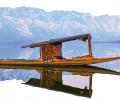
As temperatures soar, booking queries have surged by double digits -- going up to 125 per cent -- for destinations like Kashmir, Shillong, Gangtok, Munnar, Leh, Rishikesh, Guwahati, Imphal, Kodaikanal and the Andamans.

We dug out these pictures of Vietnamese actor Kha Ngan that reveal her love for swimming, fitness, and fashion.

India's Greco-Roman wrestlers had a successful start at the U23 Asian Championships, securing five medals, including two silver and three bronze, on the opening day of the competition.

Stunning landscapes, natural beauty, clean beaches, cultural wealth, mouth-watering food, shopping options, safety for solo travellers, warm hospitality, easy visas, and connectivity make Vietnam a must-visit destination, discovers Ramesh Menon.

The Strait of Hormuz crisis is impacting lifestyles worldwide, from reduced gold purchases in India to energy conservation in Europe and Japan, as governments urge citizens to adapt to the global energy shock.

Urvashi Rautela made a stunning and unexpected return to Cannes on May 12, dazzling in a glamorous silver gown and a unique bird-inspired headpiece for her fifth consecutive appearance at the famed film fest.

Sadhvi Satish Sail, model and entrepreneur, is crowned Femina Miss India World 2026.

Companies are already diversifying sourcing, raising prices, and reworking operating models as the disruption drags on.

'Some much needed break waves + peace = healing.'

India's young boxers have showcased their talent at the Asian Boxing U15 & U17 Championships 2026 in Tashkent, securing victories in various weight categories.

Guntas Kaur Sandhu will lead the Indian team at the Queen Sirikit Cup, a prestigious Asia-Pacific amateur team championship in Indonesia.

Indian rowers Balraj Panwar and Babu Lal Yadav are confident of winning gold medals at the upcoming Asian Games in Japan, aiming to improve upon their previous performances and end India's wait for a rowing gold at the event.

India U20 Women's team must win against Chinese Taipei to keep their hopes alive for reaching the quarter-finals of the AFC U20 Women's Asian Cup.
India's U-17 girls boxers began their campaign at the Asian Boxing U17 Championships 2026 with five victories. In the boys' category, Neela Narendra Kumar also won his bout.
India's U20 women's team must defeat Chinese Taipei in their final Group C match to keep their hopes alive of reaching the quarter-finals of the AFC U20 Women's Asian Cup.

Japan thrash India 11-0 at Women's Asian Cup, Taiwan hold off Vietnam

India's Ayush Shetty defeated world No. 7 Lin Shi Feng at the Badminton Asia Championships, while PV Sindhu and HS Prannoy also advanced. Lakshya Sen and Kidambi Srikanth exited in the opening round.

Two India-bound LPG tankers have crossed the Strait of Hormuz amid heightened tensions in the region, while an India-flagged vessel sank after being hit near the strategic shipping corridor.

Long-serving rowing coach Ismail Baig, a Dronacharya awardee, is no longer part of the national setup, a development he describes as 'shocking'. The Rowing Federation of India president Balaji Maradapa confirmed that Baig is not part of the coaching setup for the Asian Games.
Ayush Shetty defeated world No. 7 Li Shi Feng at the Badminton Asia Championships, while PV Sindhu and HS Prannoy also advanced. Other Indian players faced setbacks in the opening round.

The 2026 Asian Senior Weightlifting Championships, featuring participants from approximately 30 nations, commenced in Gandhinagar, highlighting India's growing role in international sports.

India's women's team faces a tough challenge against Japan in their second AFC Women's Asian Cup match after a narrow defeat to Vietnam. The team aims to maintain intensity and adapt tactically against the formidable Japanese side.

India's AFC Women's Asian Cup campaign ended with a 3-1 defeat to Chinese Taipei, highlighting their inability to convert chances despite dominating the game.

The Indian U17 women's team is set to play China in the quarter-finals of the AFC U17 Women's Asian Cup, with a spot in the 2026 FIFA U17 Women's World Cup at stake.

Vietnam was wonderful and the people warm and hospitable, Radhika Mittal discovered over a 11-day stay.

Hyderabad Police Commissioner V C Sajjanar convened a meeting with bankers to address the misuse of bank accounts in cyber frauds and implement preventative measures, following 'Operation Octopus' which dismantled cyber fraud networks and led to arrests of complicit bank officials.

Whether it's navigating the labyrinthine Cu Chi Tunnels, boating on the Mekong, marveling at ancient Champa temples, or the Mekong Bay, Vietnam promises a journey like no other.

The 2026 Asian Senior Weightlifting Championships, featuring athletes from 30 countries, will be held in Gandhinagar from May 11 to 17. The event serves as a qualifier for the 2026 Commonwealth Games.
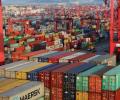
India's exports recorded a 13.78 per cent increase to USD 43.56 billion in April, marking the highest monthly outbound shipments in over four years, primarily driven by petroleum products. However, the trade deficit widened to a three-month high of USD 28.38 billion due to a 10 per cent rise in imports.

Fitch Ratings has warned that India's oil marketing companies (OMCs) could face significant credit pressure if crude oil prices remain elevated, leading to eroded earnings and increased working capital needs due to delayed fuel price pass-through.

Indian archers secured two bronze medals and advanced to the finals of the men's recurve and women's compound team events at the Asia Cup World Ranking Tournament Stage 1 in Bangkok.

It is time for India to step up and get Russia, China and Europe to agree to a joint appeal to all combatants. Time is of essence, tomorrow may be too late, asserts Colonel Anil A Athale, former head of the history division, ministry of defence.
